VISIBLE STORIES OF INVISIBILITY
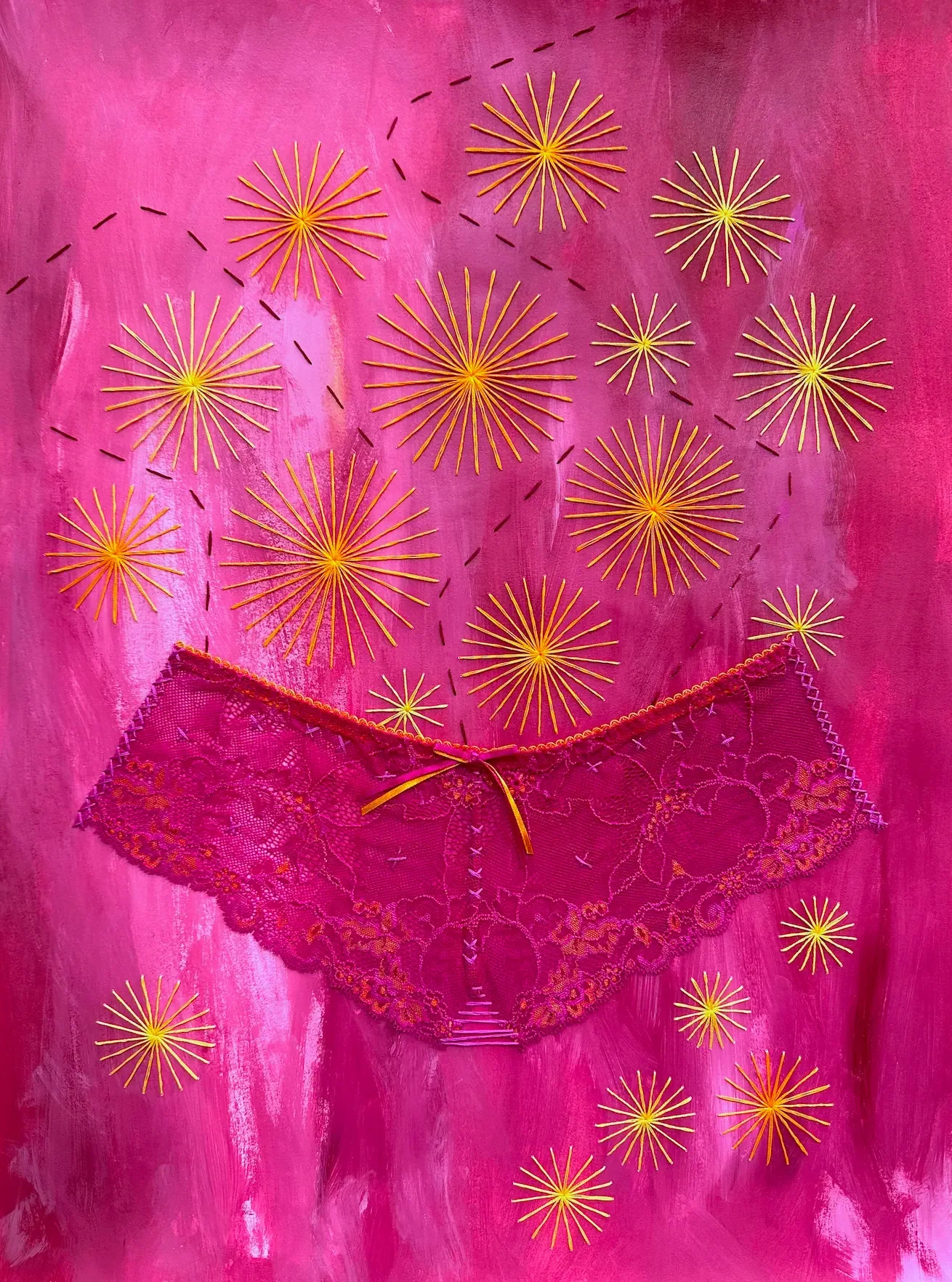
The Scars We Have
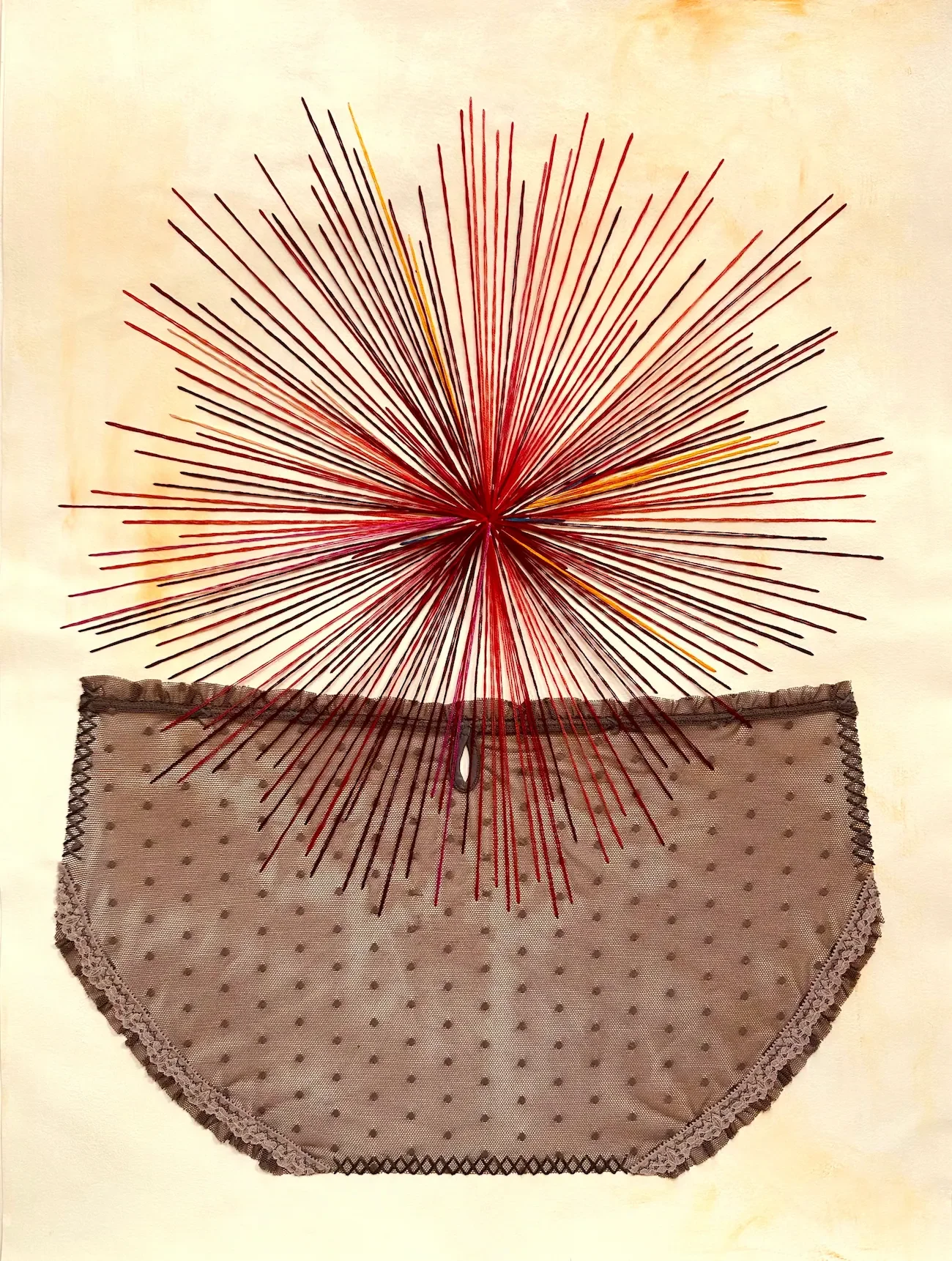
Birth
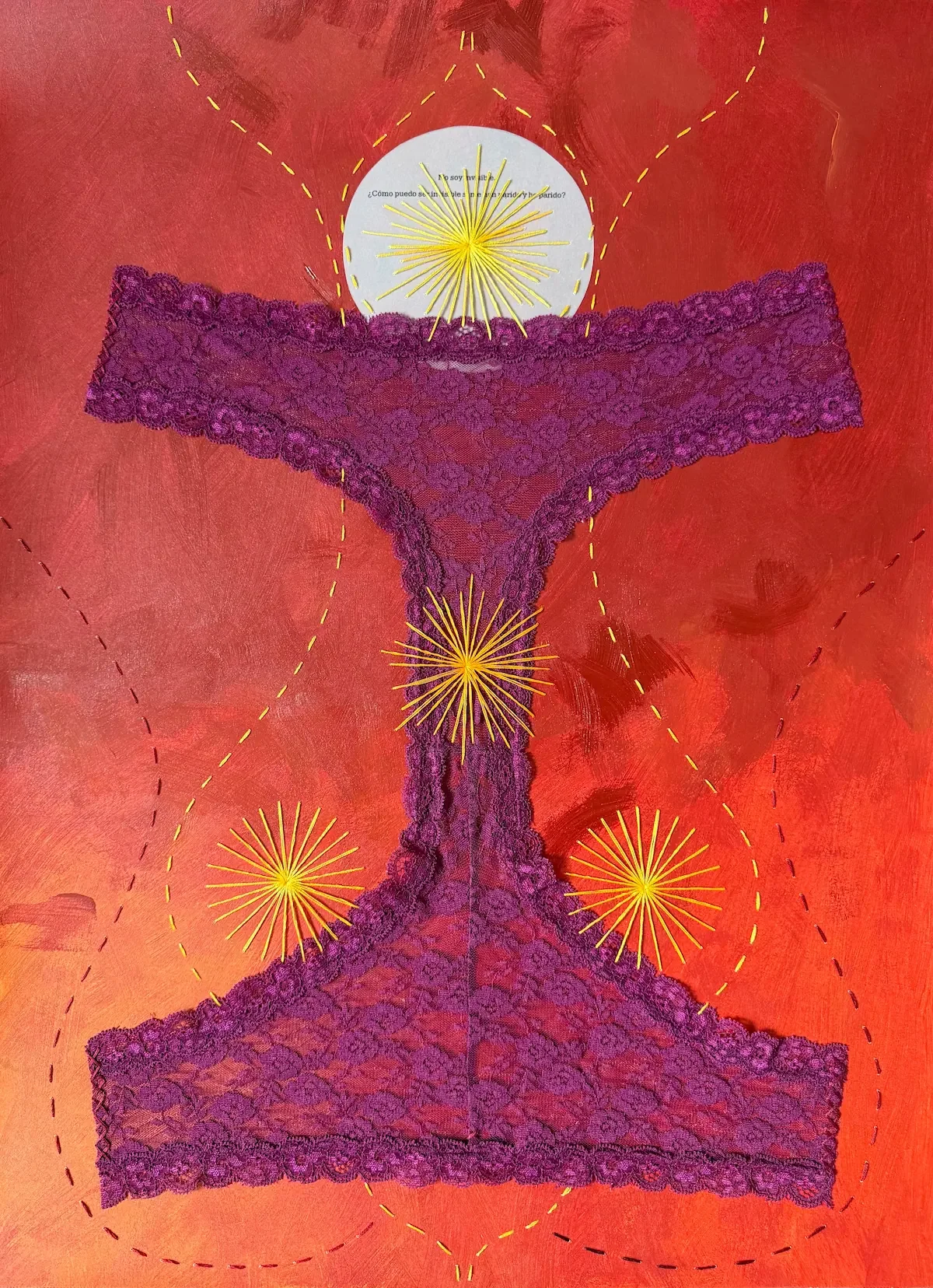
Family Tree. Self-portrait
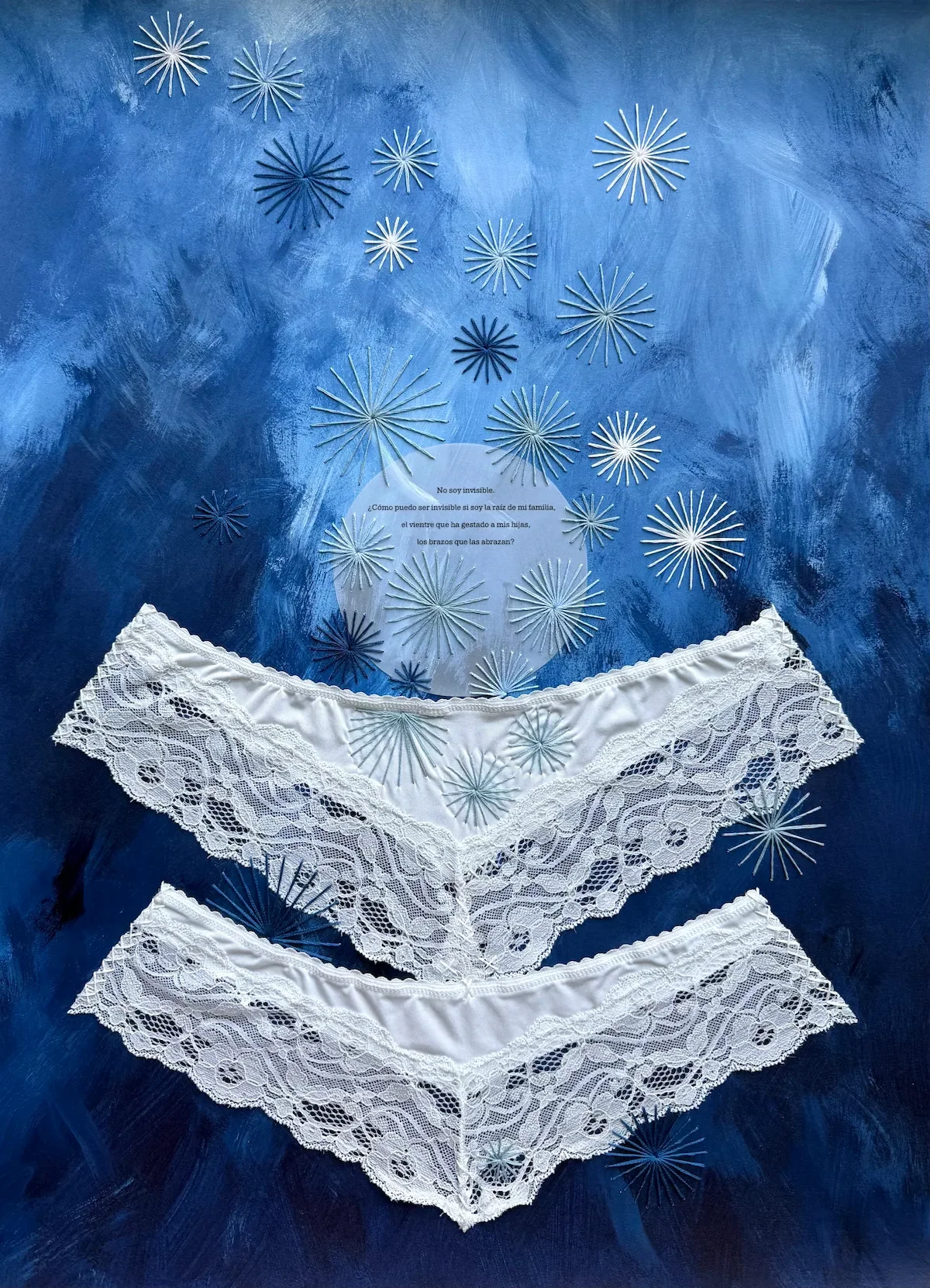
Legacy. Self-portrait
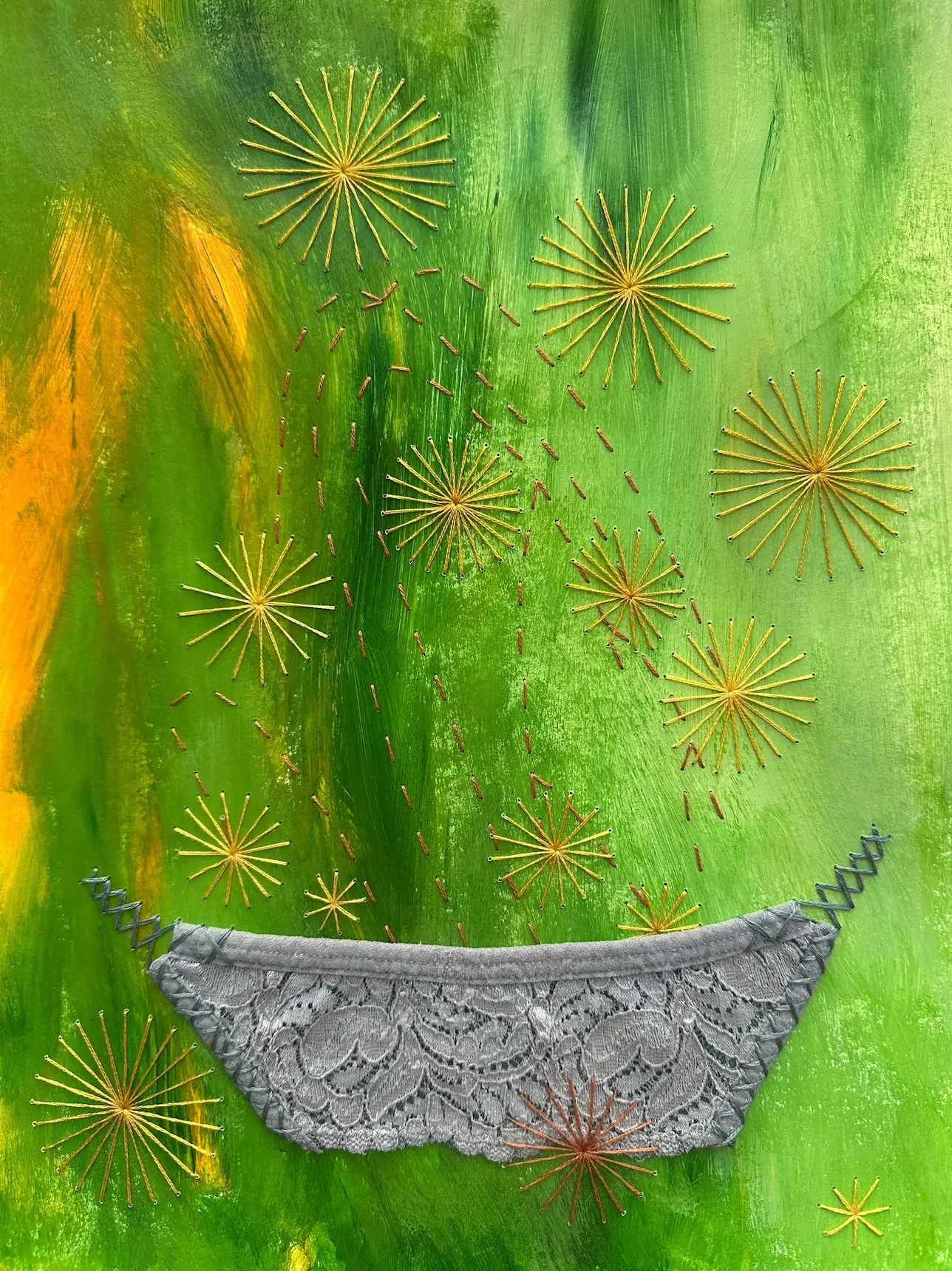
Weaving The Future
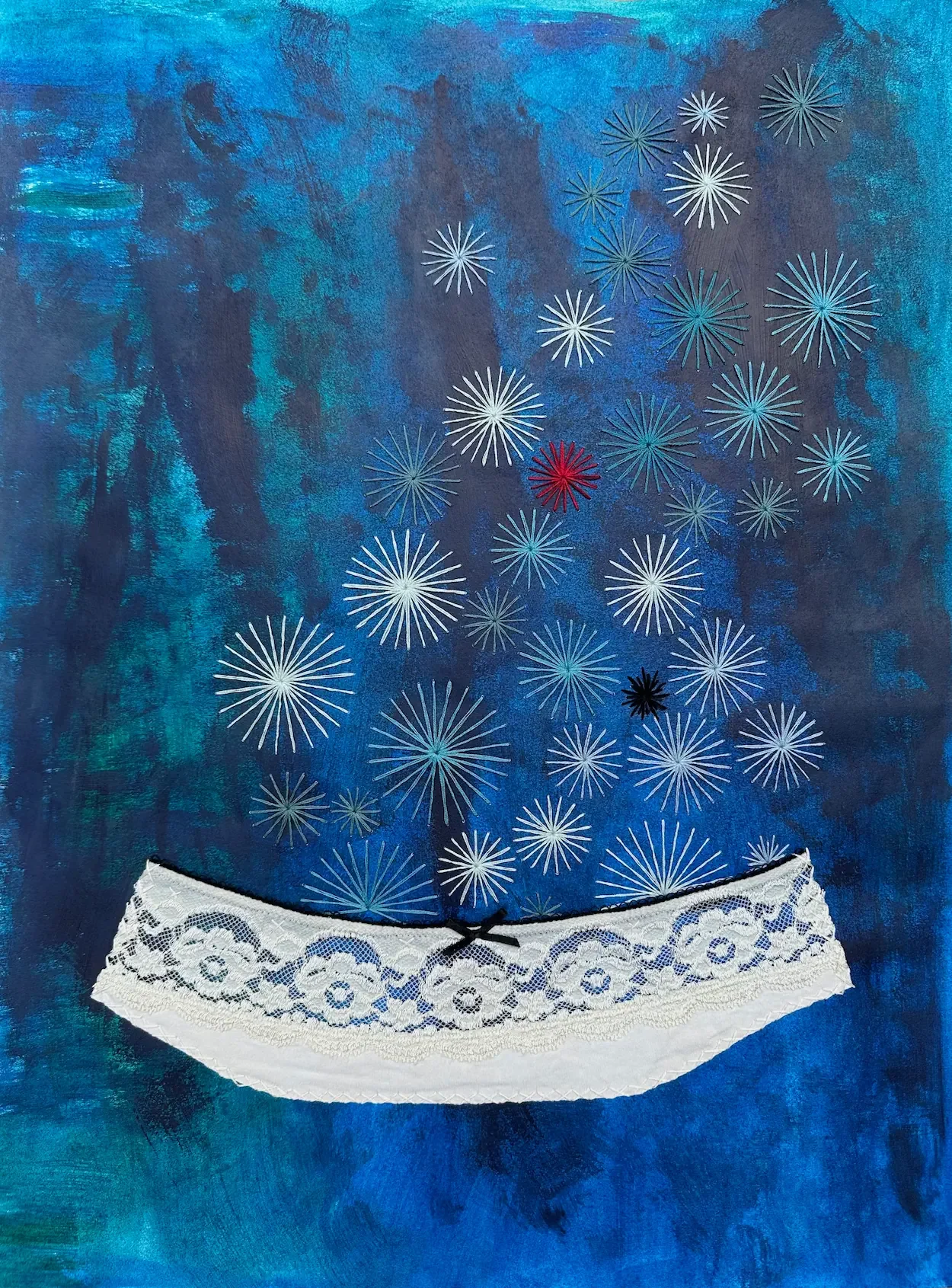
Perennial
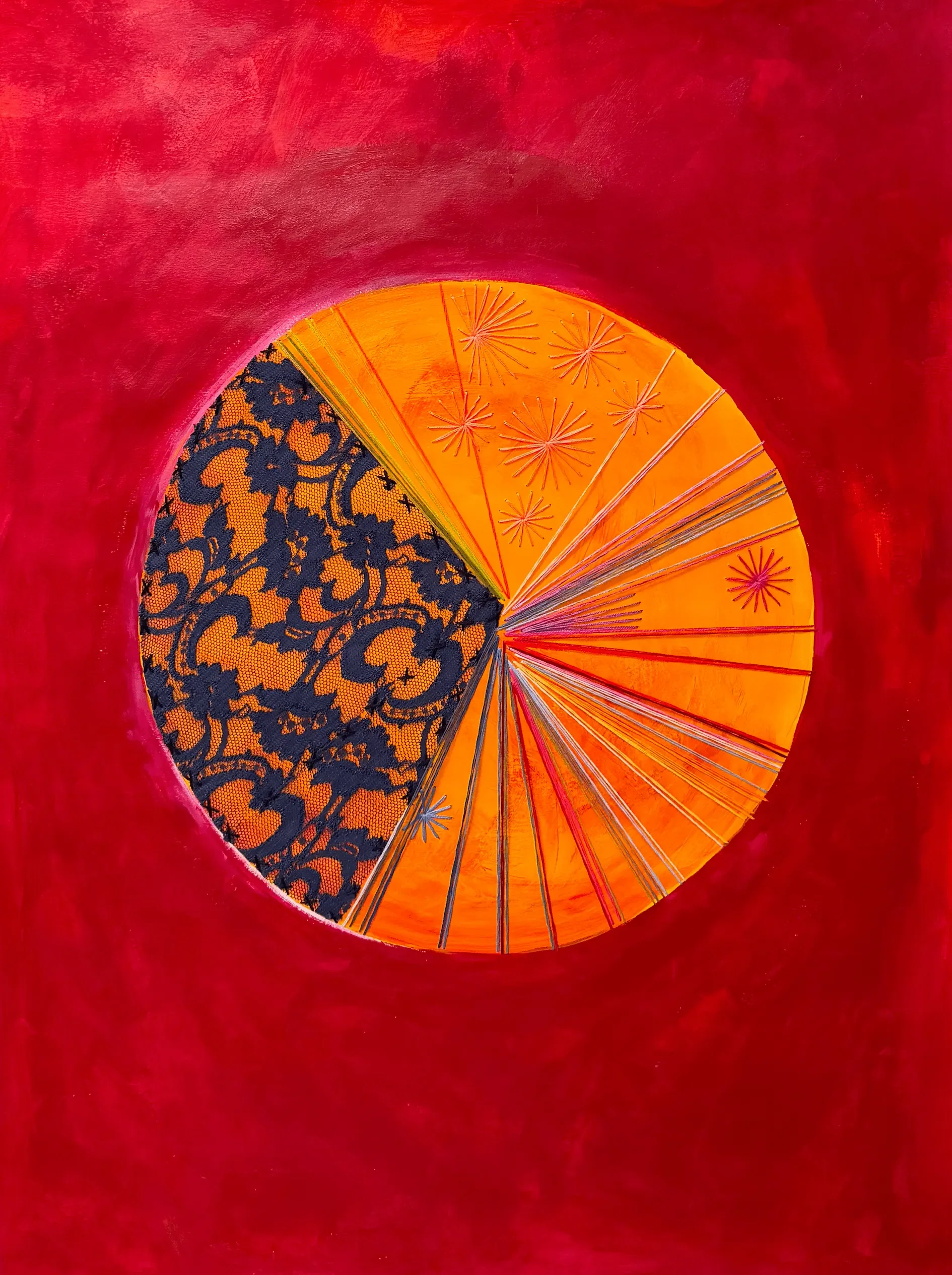
Pie Chart. Our Voice
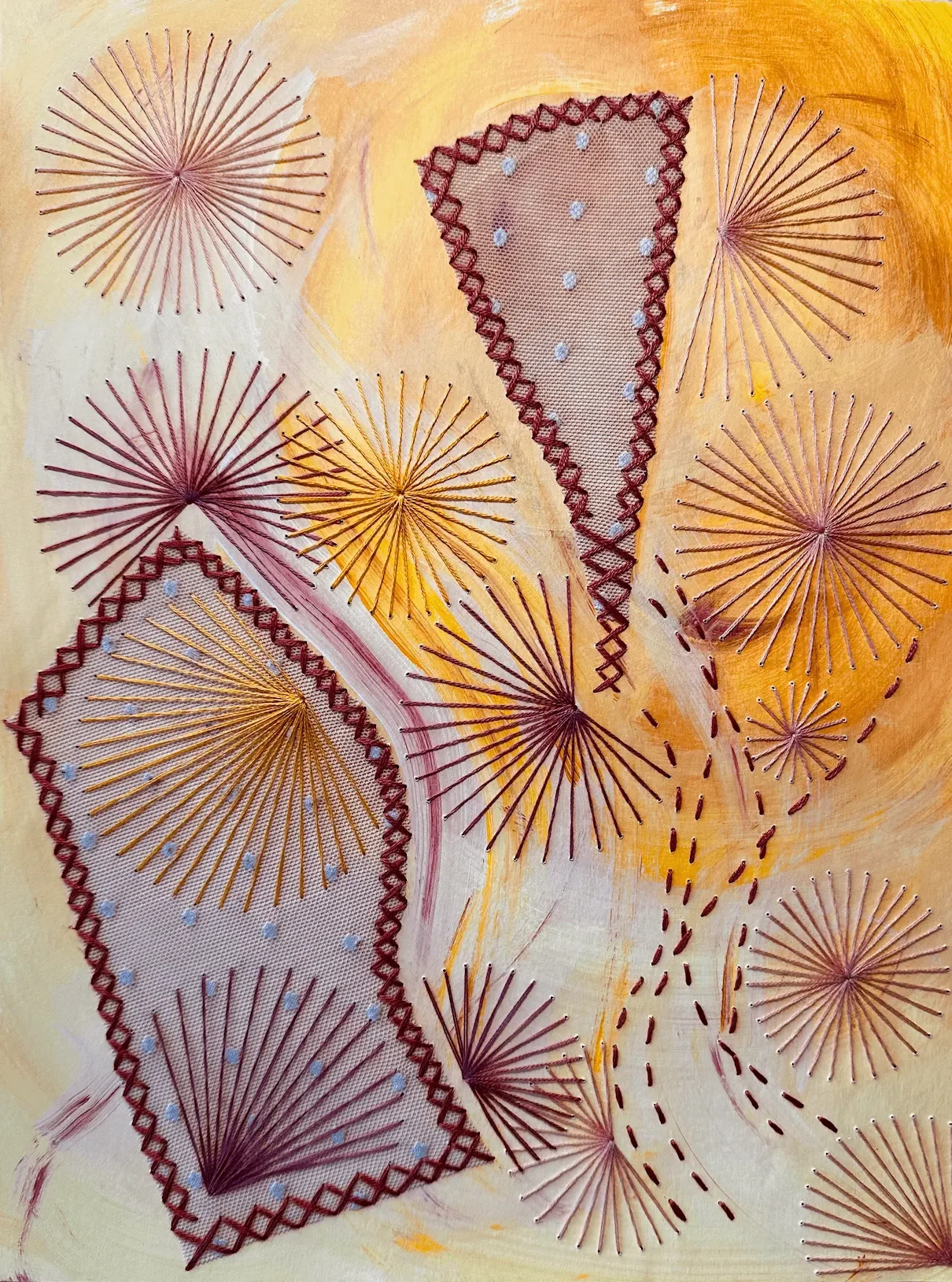
I Am Not Invisible
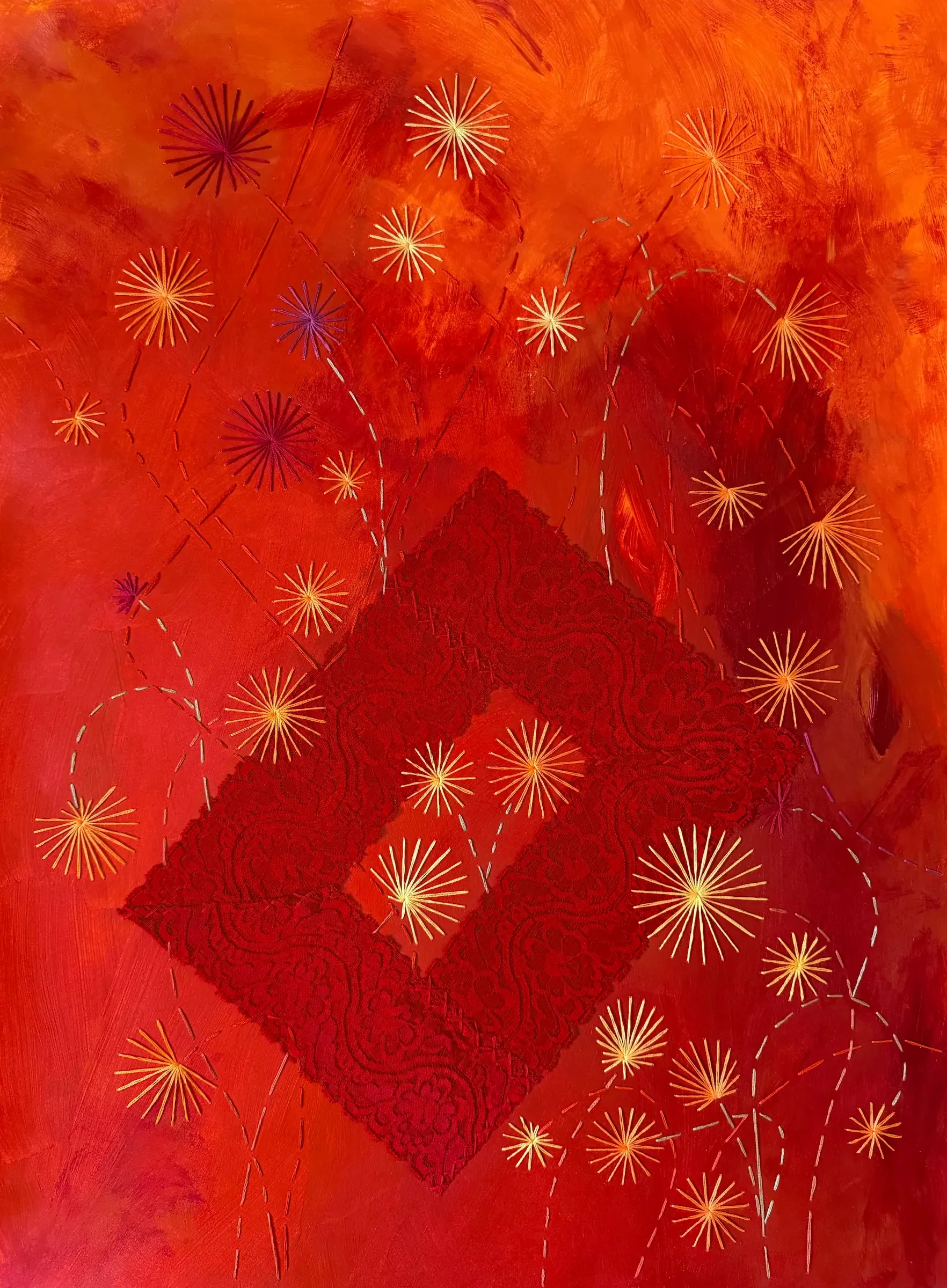
Breaking The Rules
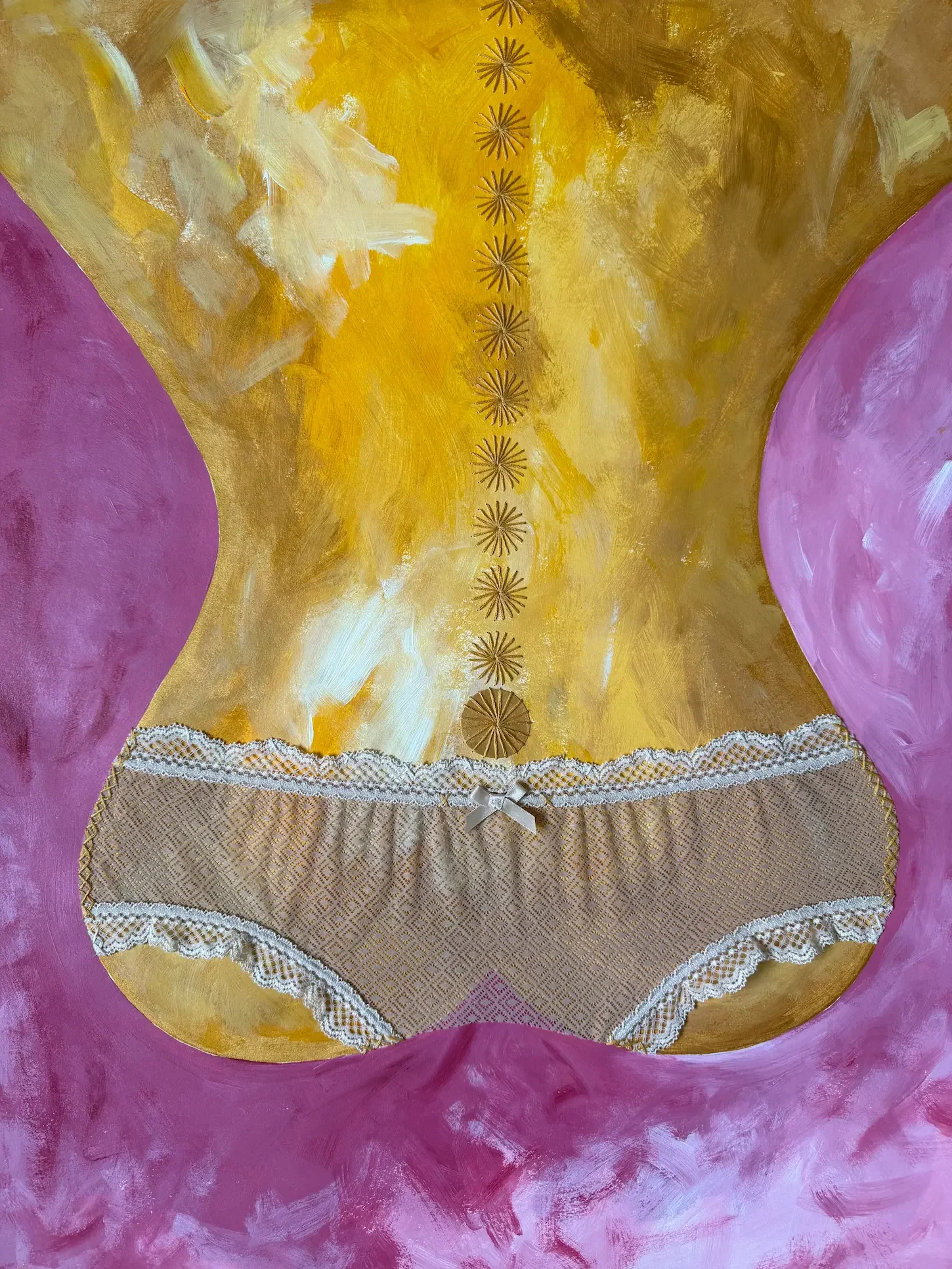
The Spine Under My Skin. Self-portrait
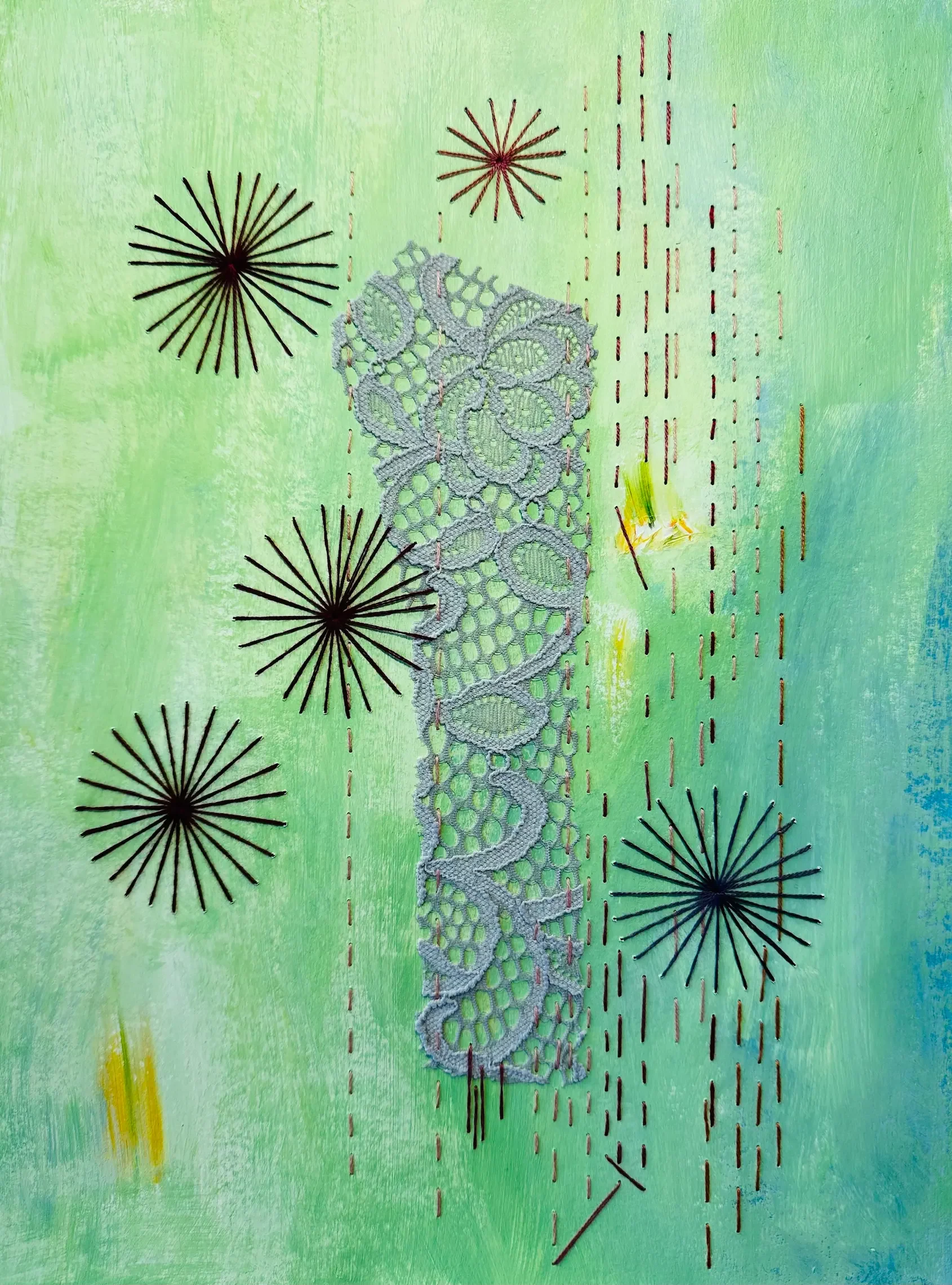
Roots
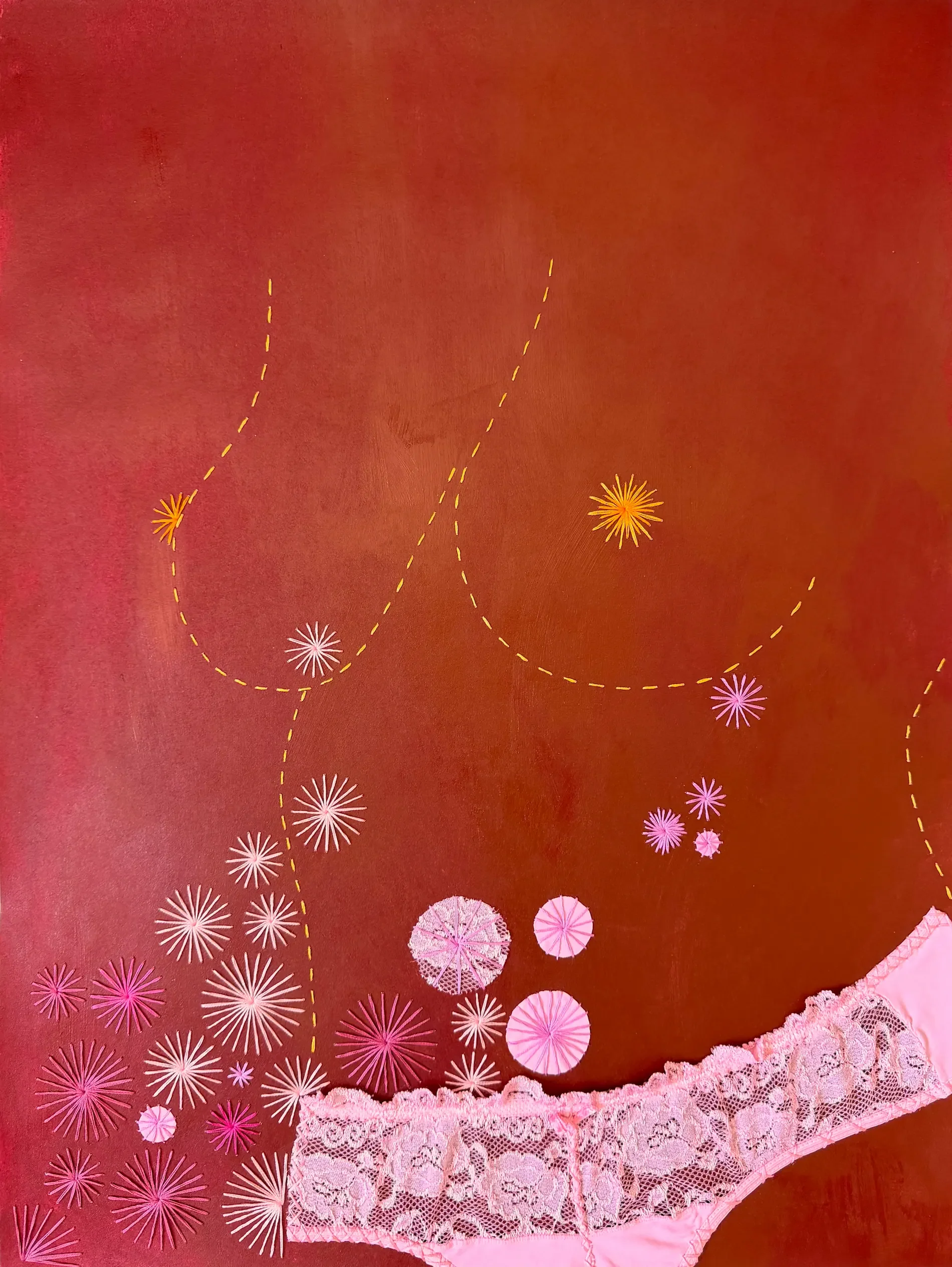
Through My Own Lenses. Self-portrait
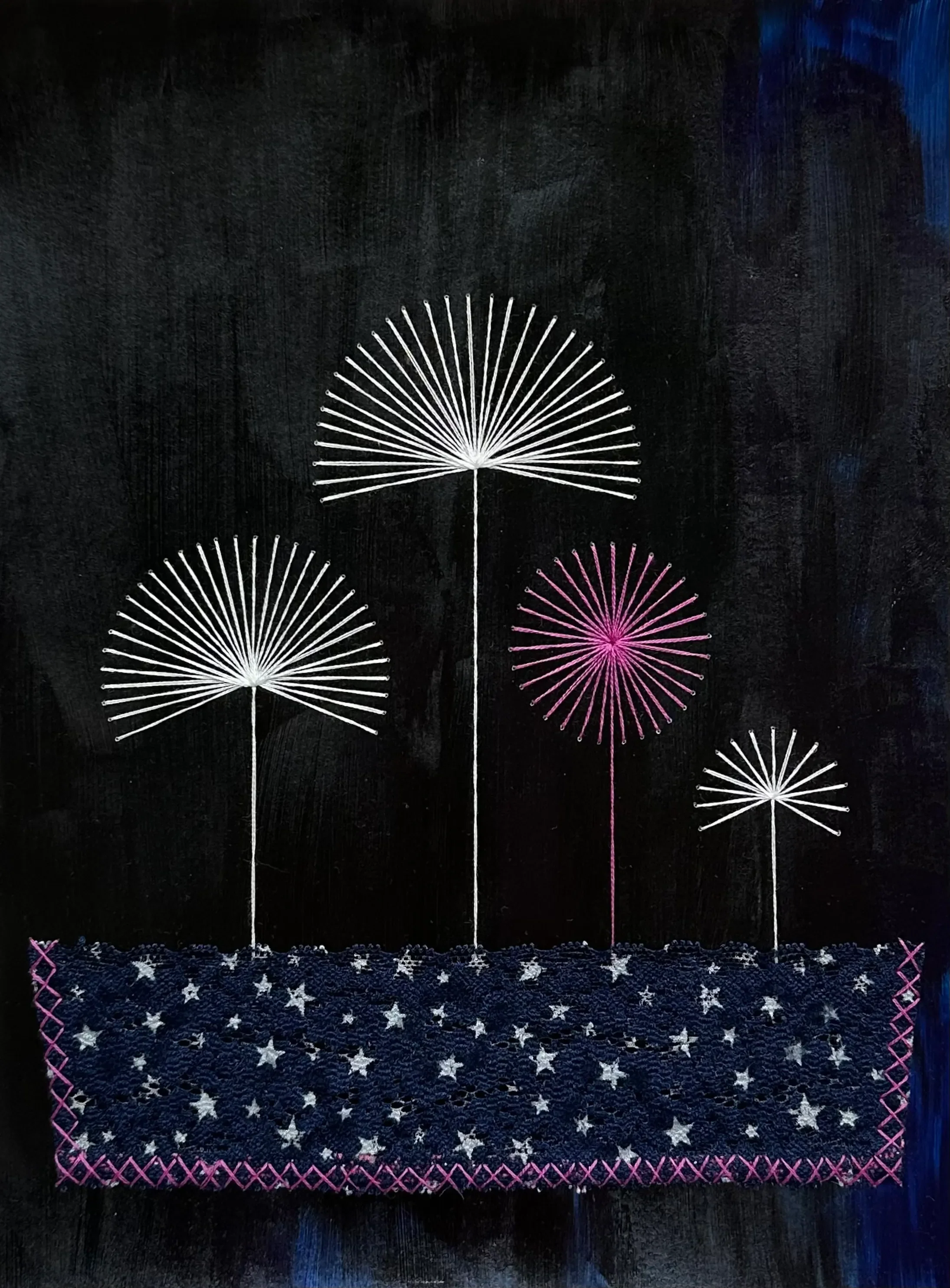
Embroidering Life
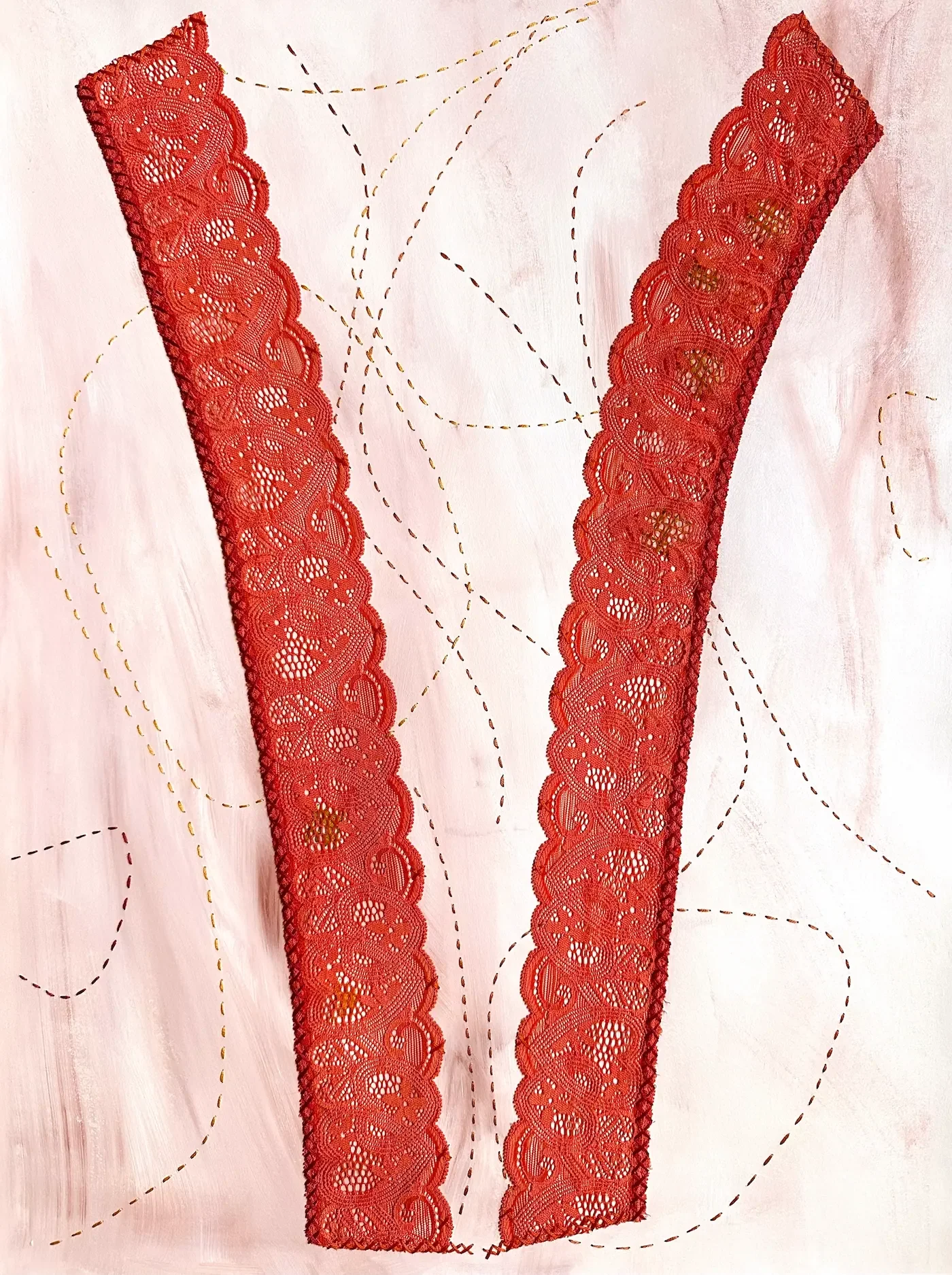
The Paths of Life Are Like Sewing Patterns I
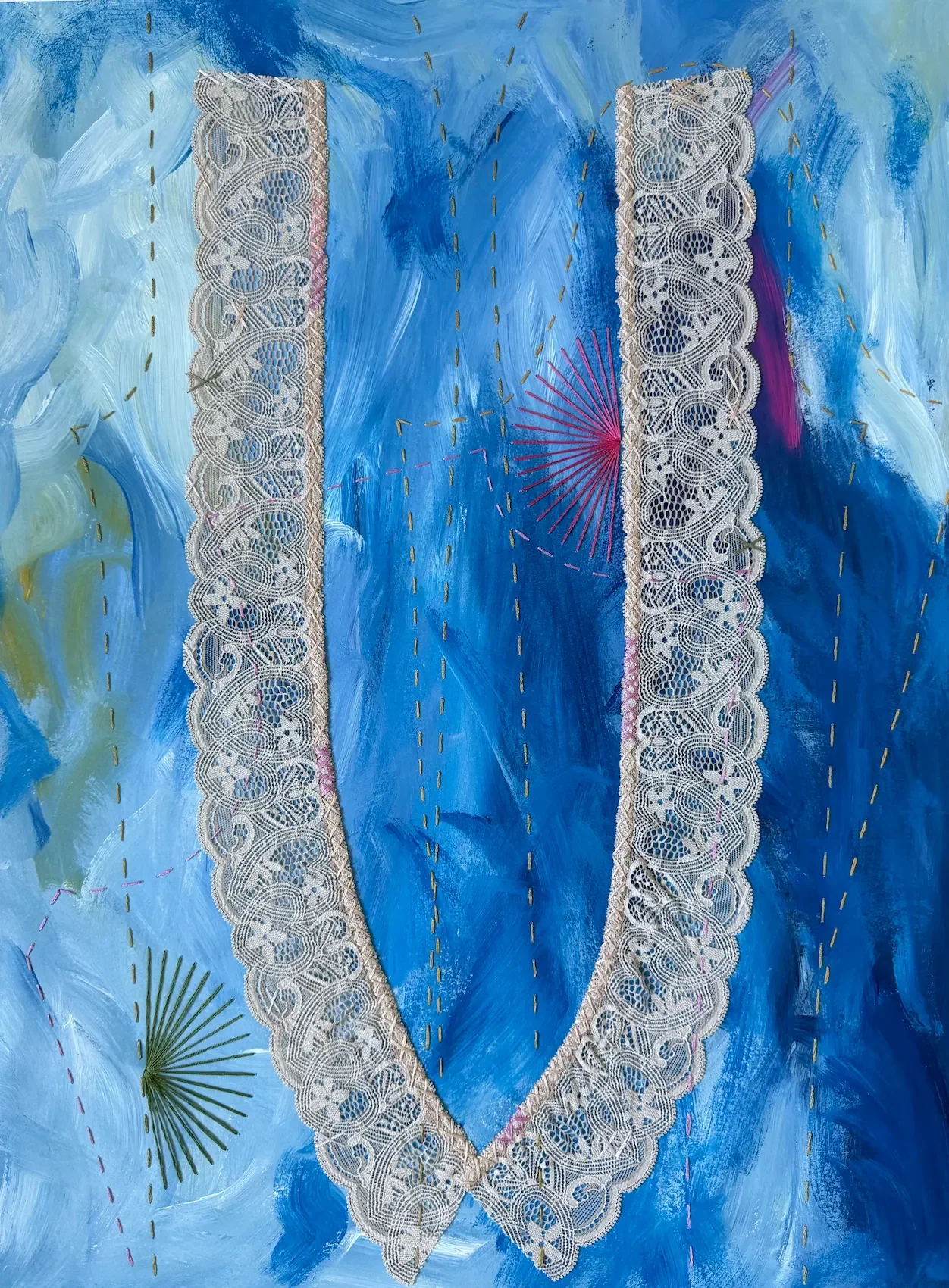
The Paths of Life Are Like Sewing Patterns II
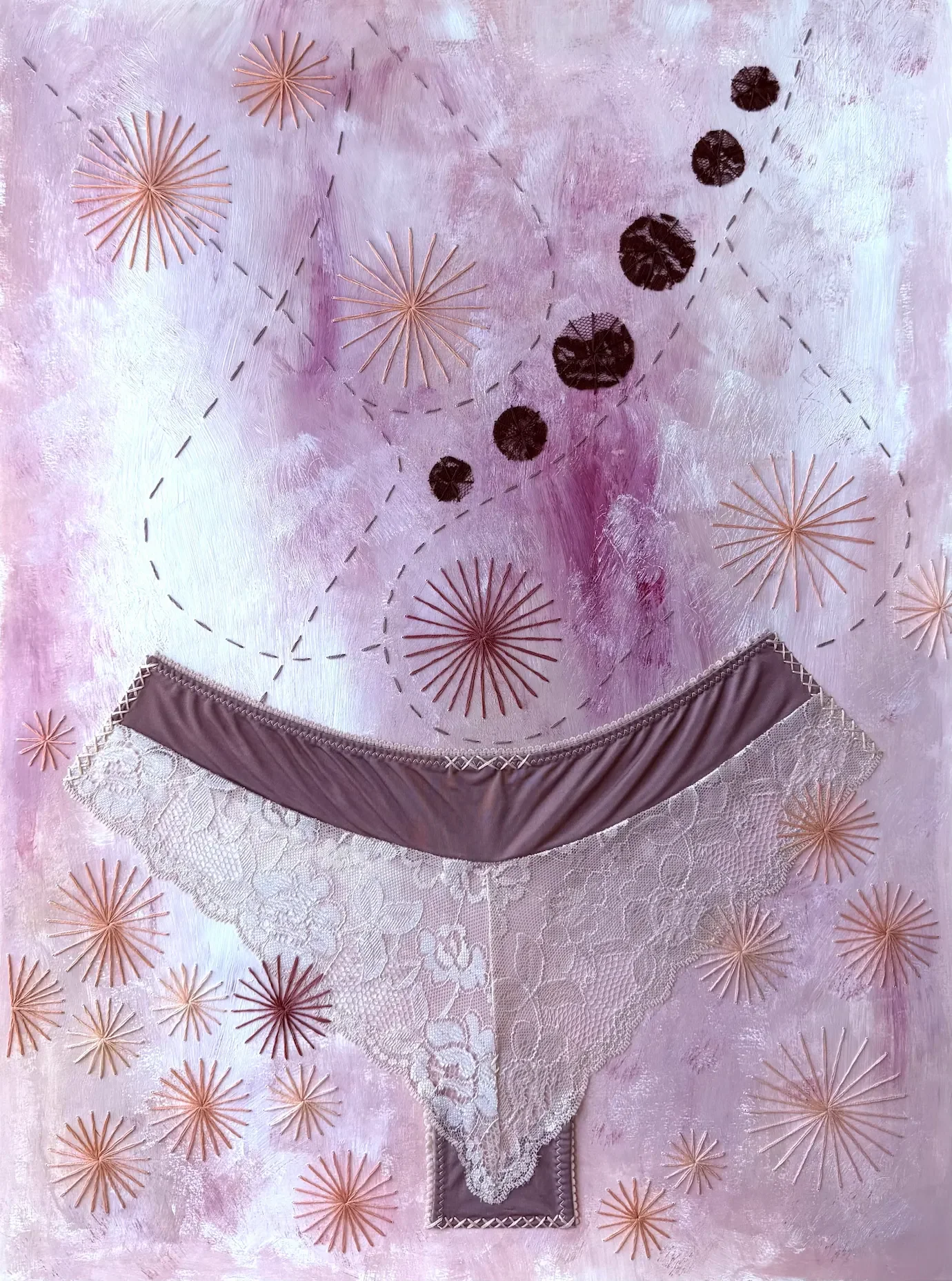
I Am Not A Mother
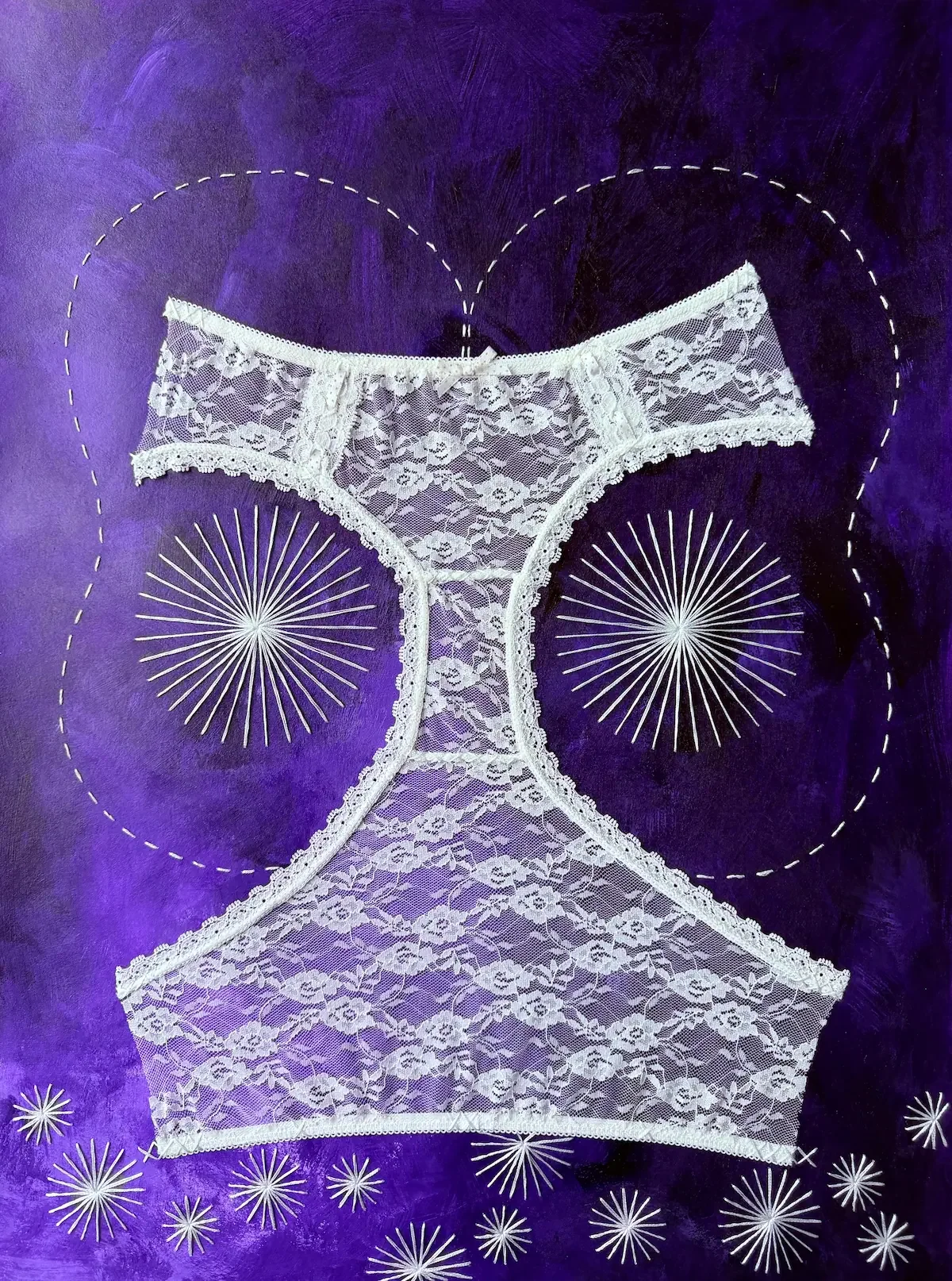
Fruits of My Womb. Self-portrait
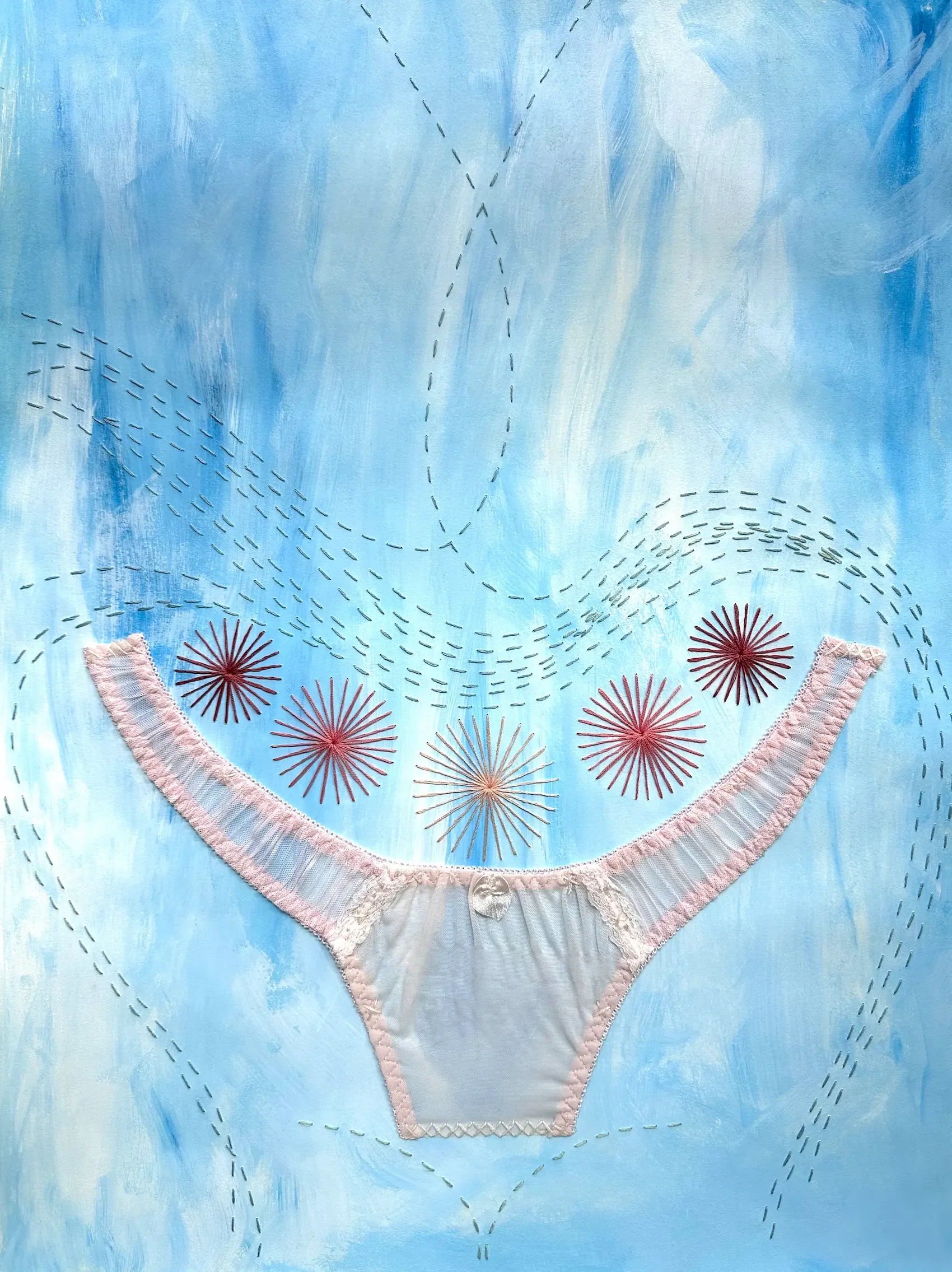
Looking Underneath
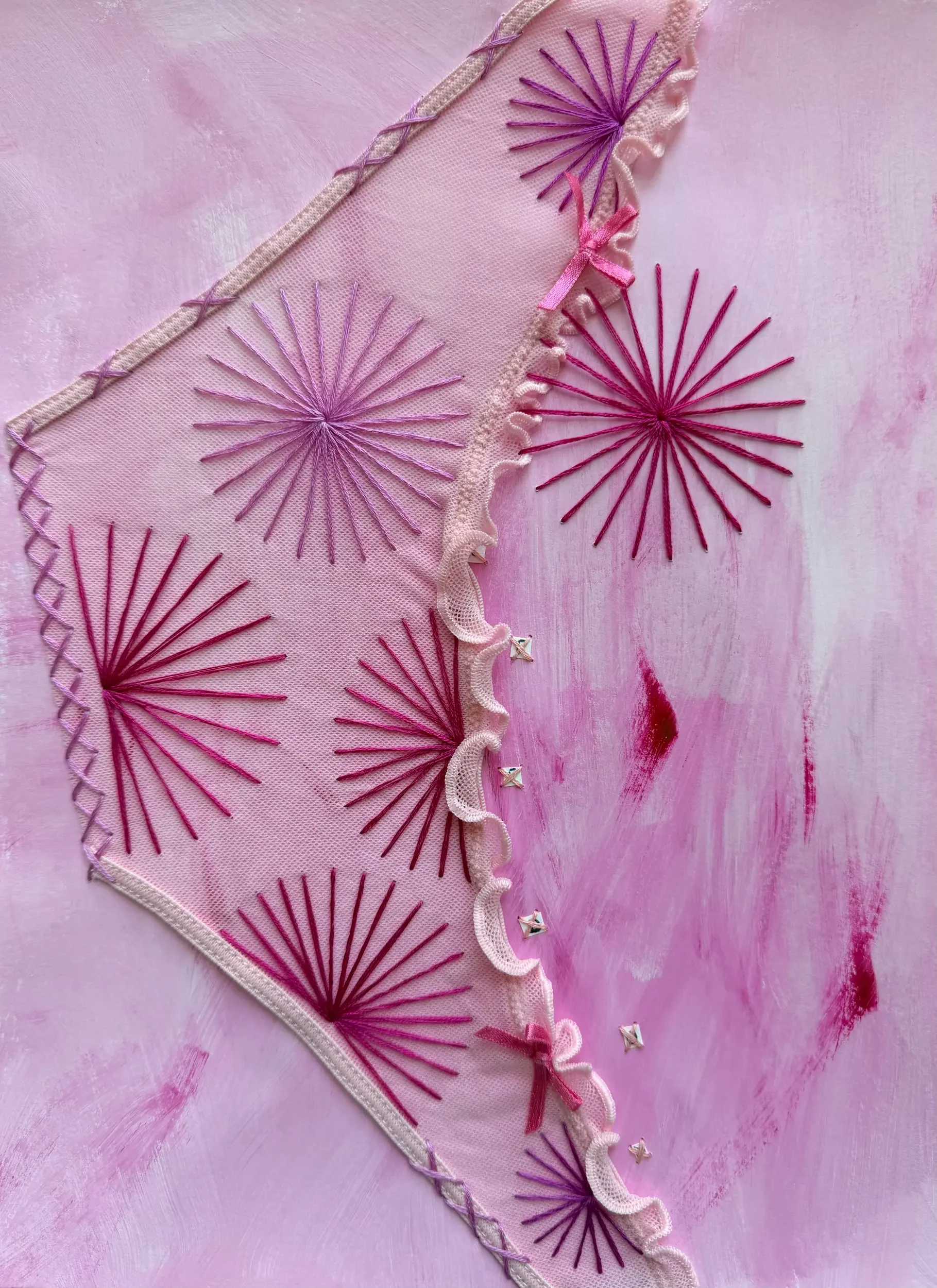
Freedom
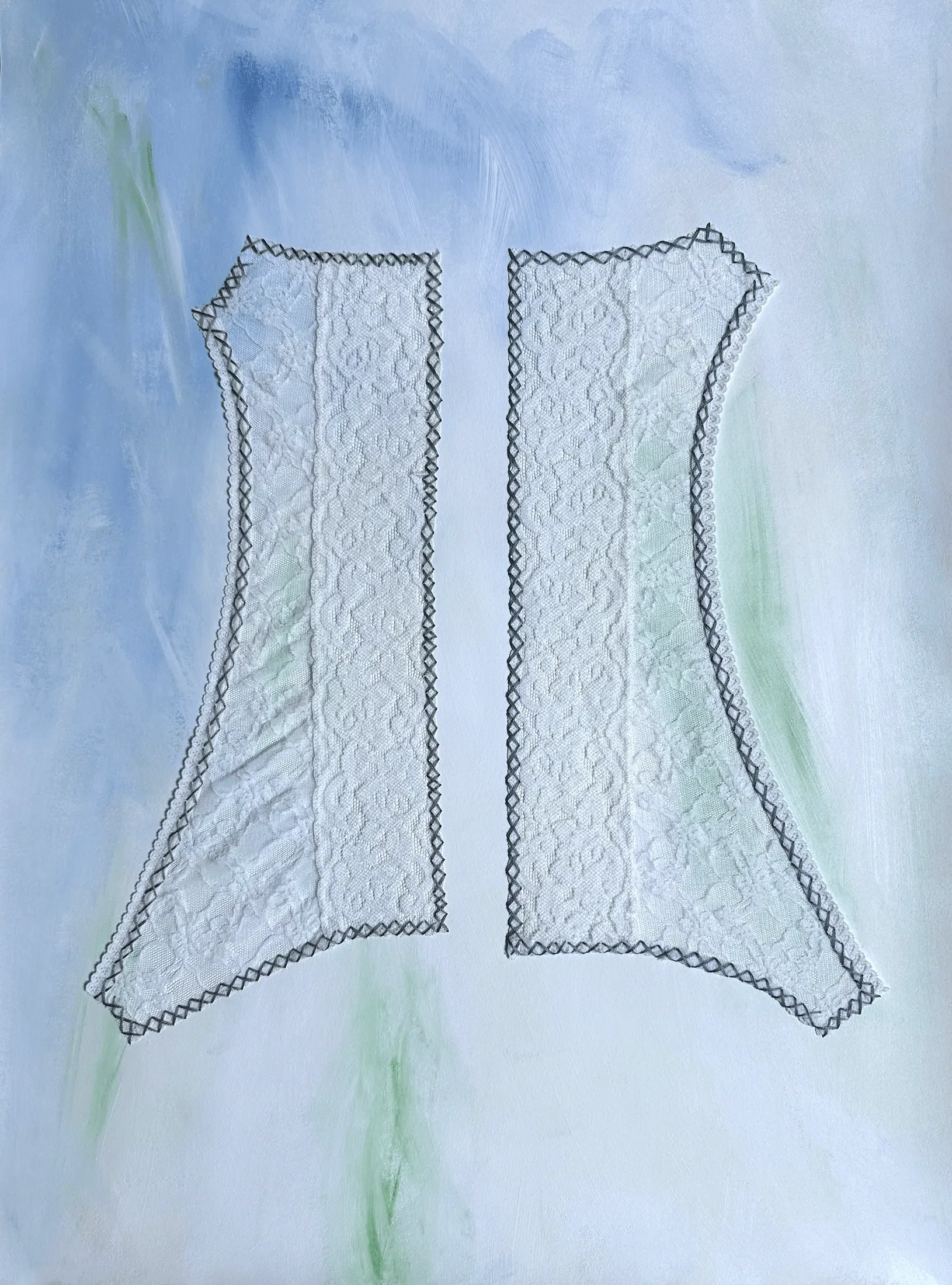
Renascence I
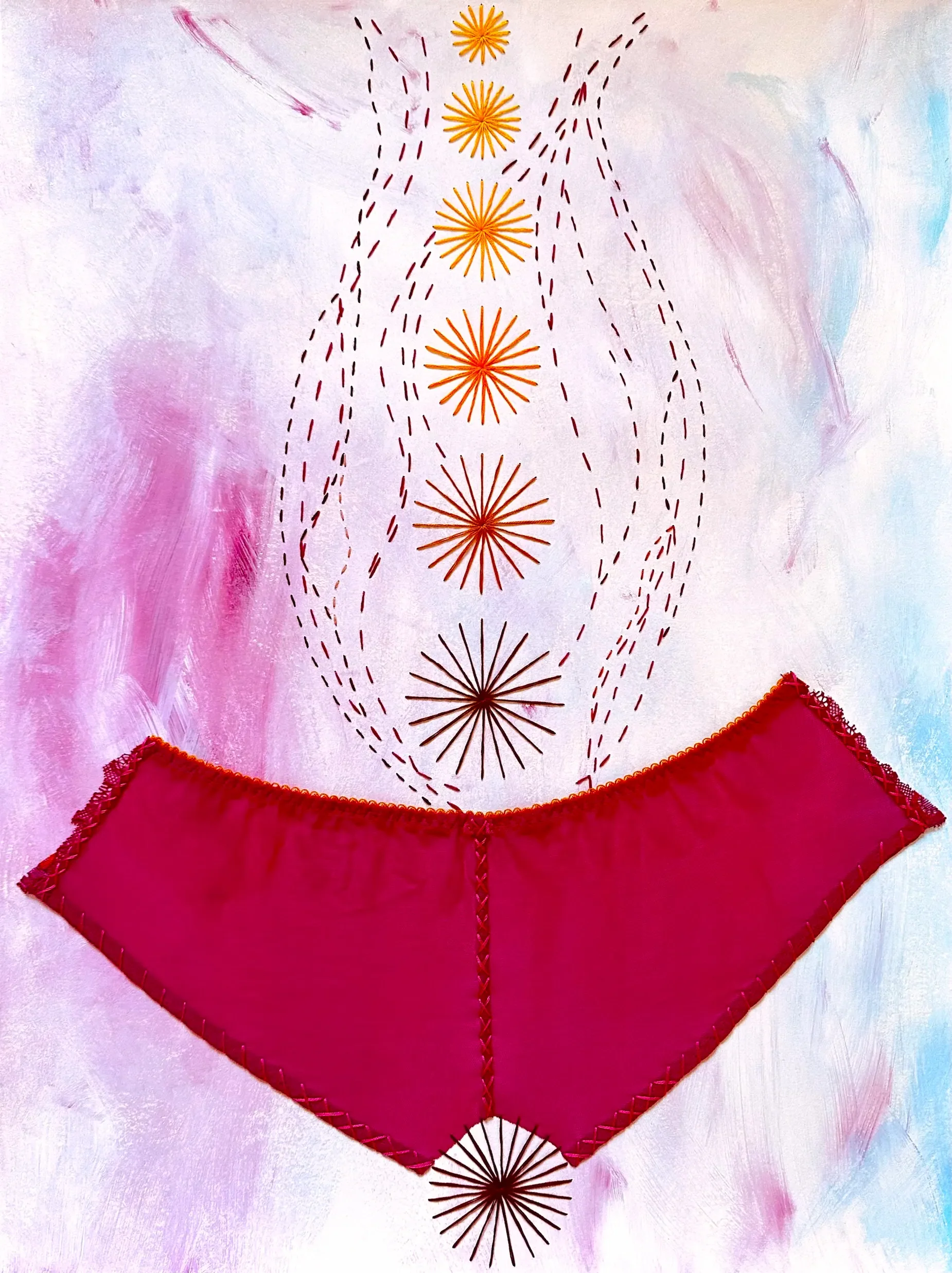
In The Search of Beauty
Artist Statement
Visible Stories of Invisibility is a body of work about womanhood, time, and visibility.
The testimonies of more than 300 women led me to create a series of works that reveals the often-unseen reality of women over fifty. Their voices prompted my own line of questioning of what it means to age in a society that relentlessly glorifies youth.
The outcome is a body of work in which I use donated discarded lingerie, thread, and paper, materials that manifest the tensions between intimacy and tradition, taboo and acceptance.
I chose paper as the foundation because each work will become a page where a story unfolds. The most vital medium, however, is the fragments of undergarments. Every single remnant was once worn by a woman, carrying traces of lived experience. Through them, their stories re-emerge.
All these elements are bound together using the historically feminine crafts of sewing and embroidery, adding a layer of labor and care. This act of stitching connects the work to memories of my mother, who passed away young and was the first woman I witnessed fading into society’s invisibility.
In each piece, the front is as important as the back, reflecting that every story holds more than what meets the eye.
In a world where so much is treated as disposable, I want to archive, mend, and rebuild.
It embraces vulnerability and imperfection as both, an offering and an act of preservation.
Video by Hunter Kaufman and Camila Grimaldi
© Silvia Felizia. All rights reserved.
A Chorus of Presence: Visible stories of invisibility
by Rosa Ana Orlando
There is a moment in many women’s lives that arrives without ceremony.
The body continues its quiet process. Desire remains. Curiosity deepens. Memory grows denser, richer, more layered. Yet something shifts. Eyes linger elsewhere. Conversations pass over them. Doors once open begin to close, almost imperceptibly. They have not disappeared. They have simply become invisible to a culture that mistakes youth for relevance and visibility for existence.
A Chorus of Presence: Visible Stories of Invisibility begins inside this paradox.
Not with absence, but with presence. Not with silence, but with voices that have always existed, waiting for someone to listen.
For Silvia Felizia, the work originated many years ago in Bangkok, listening to women in their fifties describe a feeling they returned to again and again: I have become invisible. At first, these conversations belonged to other lives. They remained with her as fragments, unfinished sentences carried across countries and years. Only later, after living in Kyiv and London before returning to Texas, after her daughters had grown, and after the familiar architecture of family and friendship had changed, did those voices begin to echo within her own experience.
Recognition transformed listening into responsibility.
During the isolation of the pandemic, Felizia reached outward. Through an open invitation, more than three hundred women from different countries, cultures, and backgrounds responded anonymously to two simple questions: Do you feel invisible? And if so, What makes you feel visible?
What emerged was a multifaceted chorus of voices, a complex polyphony.
Some women felt seen wearing red lipstick. Others in perfume lingering on their skin. Some spoke of books, horses, gardens, dancing, cowboy boots, grandchildren, volunteer work, friendship, work itself, solitude, making art. Several answered that invisibility had become their own liberation, finding the freedom of no longer performing for the expectations of others.
The voices do not seek agreement. They refuse the comfort of a single narrative. Instead, they reveal something far more truthful: that womanhood, especially after fifty, cannot be reduced to a cultural script. It is contradictory, plural, unfinished. It contains grief and delight, exhaustion and reinvention, longing and release—often all at once.
Among these hundreds of testimonies, one image returned with quiet insistence: lace lingerie.
Again and again, women described it as the object that made them feel beautiful, powerful, sensual, unmistakably themselves.
The paradox is profound. What made so many women feel most visible was something almost no one else could see.
From that revelation, the exhibition found its material language. The lace that appears throughout these works has lived another life. Every fragment was worn and donated by a woman. Each carries the invisible archive of a body: warmth, movement, intimacy, celebration, loss, desire, illness, recovery, birth, touch, and time. These garments are no longer clothing. They have become tangible memories.
Felizia does not represent women. She works with what these women have lived.
Paper accompanies lace as another keeper of memory.
For centuries, paper has been the recipient of letters, drawings, prayers, testimonies, official histories, and forgotten ones. It records what we hope will survive us, yet it tears with astonishing ease. It is both durable and vulnerable, much like remembrance itself. In these works, paper becomes skin, page, landscape, and archive all at once.
Thread weaves everything together.
Thread carries a long history as a material of care. It closes wounds. Repairs what has torn. Connects fragments that would otherwise drift apart. Through sewing and embroidery—practices historically confined to the domestic sphere and frequently dismissed because of their association with women—Felizia transforms acts of making into acts of resistance. Stitch by stitch, sewing becomes drawing, writing, mending, and remembrance. It connects generations of women whose knowledge has often circulated outside official histories while carrying a deeply personal thread: the memory of the artist’s own mother who, by passing at a young age, was the first woman she witnessed gradually fade away. Every stitch becomes both inheritance and invocation. The thread passes through every work like an unseen lineage, binding private memory to collective experience. Felizia reclaims that inheritance without nostalgia. Her stitching does not decorate. It bears witness.
Every story has another side waiting to be seen.
These works challenge the traditional convention of front and back. Knots remain visible. Loose threads wander across the surface. The hidden labor is allowed to remain visible. The unfinished is allowed to exist without apology. Imperfection is not corrected because imperfection is evidence. It is the trace of time passing through material, just as wrinkles, scars, tenderness, and resilience pass through a life.
What emerges across the exhibition is not an argument against aging. It is an argument against the cultural reality that has mistaken aging for disappearance.
Time, Felizia suggests, is not subtraction. It is accumulation: accumulation of memories, knowledge, freedom, and courage.
A Chorus of Presence: Visible Stories of Invisibility is not simply an exhibition about women over fifty. It is a meditation on what every society chooses to see, what it chooses not to see, and howart can make something visible not by illuminating what was hidden, but by teaching us how to look differently.
At the heart of this body of work lies a simple yet profound conviction: every time one woman speaks, another recognizes herself. Individual testimony becomes collective voice.
This exhibition is therefore not only about being seen. It is an act of witnessing. An archive of presence. A space where stories that have long existed at the edges move gently, but unmistakably, into the light.
The works gathered here ask us to look closely, to listen carefully, and to recognize that presence has never depended upon being seen. They remind us that flourishing has no expiration date.
Rather than mourning the passage of time, Felizia celebrates lives fully lived and the infinite possibilities that continue to unfold.
Un Coro de Presencias: Hacer Visible la Invisibilidad
por Rosa Ana Orlando
Hay un momento en la vida de muchas mujeres que llega sin ceremonia.
El cuerpo continúa su proceso silencioso. El deseo permanece. La curiosidad se profundiza. La memoria se vuelve más densa, más rica, con más capas. Y, sin embargo, algo cambia. Las miradas se detienen en otra parte. Las conversaciones les pasan por encima. Puertas que antes estaban abiertas comienzan a cerrarse casi imperceptiblemente. Ellas no han desaparecido. Simplemente se han vuelto invisibles para una cultura que confunde la juventud con la relevancia y la visibilidad con la existencia.
Un Coro de Presencias: Hacer Visible la Invisibilidad nace dentro de esta paradoja.
No desde la ausencia, sino desde la presencia. No desde el silencio, sino desde las voces que siempre han existido, esperando a alguien dispuesto a escucharlas.
Para Silvia Felizia, este cuerpo de trabajo comenzó hace muchos años en Bangkok, mientras escuchaba a mujeres mayores de cincuenta años describiendo una sensación que aparecía en sus relatos una y otra vez: Me he vuelto invisible. En aquel momento, esas conversaciones pertenecían a otras vidas. Sin embargo, permanecieron con ella como fragmentos, frases inconclusas que viajaron de un país a otro a través de los años. Solo más tarde, después de haber vivido en Kyiv y Londres antes de regresar a Texas, cuando sus hijas ya habían crecido y la estructura de su familia y amistades había cambiado, aquellas voces comenzaron a resonar dentro de su propia experiencia.
El reconocimiento transformó el acto de escuchar en una responsabilidad.
Durante el aislamiento provocado por la pandemia, Felizia decidió acudir a otras mujeres. A través de una invitación abierta, más de trescientas mujeres de diferentes países, culturas y trayectorias respondieron de forma anónima a dos preguntas sencillas: ¿Te sientes invisible? Y, de ser así, ¿Qué te hace sentir visible?
El resultado fue un coro de voces con múltiples matices. Una polifonía compleja.
Algunas mujeres se sentían vistas al pintar sus labios de color rojo. Otras al usar perfume que impregnara su piel. Algunas hablaron de libros, de caballos, de jardines, de baile, de botas vaqueras, de nietos, de voluntariado, de la amistad, del trabajo mismo, de la soledad, de crear arte. Varias respondieron que la invisibilidad había terminado por convertirse en su propia liberación: la libertad de dejar de representar el papel que los demás esperaban de ellas.
Estas voces no buscan consenso. Se rehúsan a la comodidad de una única narrativa. En cambio, revelan algo mucho más genuino: que la experiencia de ser mujer, especialmente después de los cincuenta años, no puede reducirse a un guion cultural. Es una experiencia contradictoria, plural, inconclusa. Contiene duelo y alegría, agotamiento y reinvención, anhelo y liberación—a menudo, todo al mismo tiempo.
Entre estos cientos de testimonios, hay una imagen recurrente que se repite con silenciosa insistencia: la lencería de encaje.
Una y otra vez, las mujeres la describieron como aquello que las hacía sentir hermosas, poderosas, sensuales, e inconfundiblemente ellas mismas.
La paradoja es profunda. Aquello que hacía que tantas mujeres se sintieran más visibles era precisamente algo que casi nadie más podía ver aparte de ellas mismas.
A partir de esa revelación, la exposición encontró su lenguaje matérico. El encaje presente en estas obras ya había vivido otra vida. Cada fragmento fue utilizado y donado por una mujer. Cada uno conserva el archivo invisible de su cuerpo: su calor, su movimiento, su intimidad, la celebración, la pérdida, el deseo, la enfermedad, la recuperación, el nacimiento, el contacto y el paso del tiempo. Estas prendas han dejado
de ser ropa. Se han convertido en memorias tangibles.
Felizia no representa a las mujeres. Trabaja con lo que estas mujeres han vivido.
El papel acompaña al encaje como otro custodio de la memoria.
Durante siglos, el papel ha sido utilizado en cartas, dibujos, plegarias, testimonios, historias oficiales y otras olvidadas. Si lo cuidamos, conserva aquello que esperamos sobreviva a nuestra existencia y, sin embargo, puede rasgarse con una facilidad asombrosa. Es, al mismo tiempo, resistente y vulnerable, como la memoria misma. En estas obras, el papel se convierte simultáneamente en piel, página, paisaje y archivo.
El hilo lo entrelaza todo.
El hilo cuenta con una larga historia como material asociado al cuidado. Cierra heridas. Repara lo que se ha desgarrado. Une fragmentos que, de otro modo, quedarían dispersos. Mediante la costura y el bordado—prácticas históricamente relegadas al ámbito doméstico y frecuentemente menospreciadas por su asociación con las mujeres— Felizia transforma los actos de creación en actos de resistencia. Puntada tras puntada, coser se convierte en dibujar, escribir, reparar y recordar. Así conecta generaciones de mujeres cuyo conocimiento ha circulado muchas veces al margen de las historias oficiales, mientras incorpora un hilo profundamente personal: la memoria de su propia madre, quien, al fallecer siendo aún joven, fue la primera mujer a la que vio desvanecerse poco a poco. Cada puntada es, a la vez, herencia e invocación. El hilo atraviesa toda la obra como un linaje invisible que enlaza la memoria íntima con la experiencia colectiva. Felizia recupera esa herencia sin nostalgia. Su costura no adorna; da testimonio.
Cada historia tiene otra cara que espera ser descubierta.
Estas obras cuestionan la convención tradicional del anverso y el reverso. Los nudos permanecen a la vista. Los hilos sueltos recorren libremente la superficie. El trabajo oculto tiene permitido permanecer visible. Lo inacabado tiene derecho a existir sin pedir disculpas. La imperfección no se corrige porque la imperfección es evidencia; es la huella del tiempo atravesando los materiales, del mismo modo que las arrugas, las cicatrices, la ternura y la resiliencia atraviesan una vida.
Lo que emerge a lo largo de esta exposición no es un argumento contra el envejecimiento. Es el cuestionamiento de una realidad cultural que ha confundido envejecer con desaparecer.
El tiempo, nos sugiere Felizia, no es una sustracción. Es una acumulación: acumulación de memorias, conocimiento, libertad y valentía.
Un Coro de Presencias: Hacer Visible la Invisibilidad no es simplemente una exposición sobre mujeres mayores de cincuenta años. Es una meditación sobre aquello que toda sociedad decide ver, aquello que decide ignorar y la manera en que el arte puede hacer visible algo, no iluminando lo que estaba oculto, sino enseñándonos a mirar de otra forma.
En el corazón de este cuerpo de trabajo habita una convicción sencilla y, al mismo tiempo, profunda: cada vez que una mujer habla, otra se reconoce en ella. El testimonio individual se transforma en voz colectiva.
Por ello, esta exposición no trata únicamente de dar visibilidad a las mujeres. Es un acto de dar testimonio. Un archivo de presencias. Un espacio donde historias que durante mucho tiempo permanecieron en los márgenes avanzan suavemente, pero de manera inequívoca, hacia la luz.
Las obras aquí reunidas nos invitan a mirar con atención, a escuchar con cuidado y a reconocer que la presencia nunca ha dependido de ser vista. Nos recuerdan que florecer no tiene fecha de caducidad.
En lugar de lamentar el paso del tiempo, Felizia celebra las vidas plenamente vividas y las infinitas posibilidades que continúan desplegándose.